State Sponsorship News

Is There Uncontrolled Mass Migration in Australia?

Is There Uncontrolled Mass Migration in Australia?

Is There Uncontrolled Mass Migration in Australia?

Australia’s migration system is often described as “out of control”, but does that reflect reality?

In this article, we unpack how the migration system actually works, the current discussions around skilled migration, and what the potential impacts could be if major changes are introduced.

Is Australia’s Migration System Controlled?

Australia’s migration program is a structured and planned system, with set annual allocations determined by the Government. The current immigration system is highly controlled, with exact quotas announced and published each year on the Department of Home Affairs website.

For the 2025–2026 financial year, the permanent migration program is set at 185,000 places, a figure that is broadly consistent throughout each financial year in the past decade. The Government selects migrants based on skills and occupation shortages, experience, English proficiency, and their overall ability to contribute to the economy.

Below you can see a detailed breakdown of the 2025-2026 Migration Planning Level and the number of allocations for each category: 

Stream / Category

2025–26 Planning Level

Employer Sponsored

44,000

Skilled Independent

16,900

Skilled Regional

33,000

State/Territory Nominated

33,000

Business Innovation and Investment Program

1,000

Talent and Innovation

4,300

Global Talent

0

Distinguished Talent

0

Skill total

132,200

Partner

40,500

Parent

8,500

Other Family

500

Child

3,000

Family total

52,500

Special Eligibility

300

Total Migration Program

185,000

Source: https://immi.homeaffairs.gov.au/what-we-do/migration-program-planning-levels

What can be seen from reviewing the migration planning levels is that Australia’s Migration Program has remained relatively stable over the past 10 years. The current annual planning level for 2025–2026 is 185,000 places, which is very similar to the 190,000 places set in 2015–2016.

In 2017–2018 and 2018–2019, the migration planning levels were also set at 190,000 places. However, the final number of permanent residency visas granted was lower, with 162,417 places granted in 2017–2018 and 160,323 places granted in 2018–2019.

The biggest reduction occurred during the COVID-19 period. In 2021–2022, the planning level was reduced to 160,000 places, and only 143,556 permanent residency places were granted, as shown in the table below:

Financial Year

Planning Level

Final Permanent Residency Granted

2015–16

190,000

189,770

2016–17

190,000

183,608

2017–18

190,000

162,417

2018–19

190,000

160,323

2020–21

160,000

160,052

2021–22

160,000

143,556

2022–23

195,000

195,004

2023–24

190,000

190,000

2024–25

185,000

185,001

2025–26

185,000

Not yet available

Source: https://www.homeaffairs.gov.au/research-and-statistics/statistics/visa-statistics/live/migration-program

It becomes even more detailed than this because, within the skilled migration quota, there are separate allocation levels for each state, and the total number also includes permanent visas in the family stream, including partner visas. Overall, the planning levels show a migration system that has remained fairly consistent over the past decade.

It is very important for the states to have influence and specific allocation levels because the needs of each state are different, depending on their economy and industry demands.

The Federal Government usually relies on data, particularly from Jobs and Skills Australia, to identify where workers are needed and which occupations should be prioritised. Meanwhile, the state governments use their own data to identify the occupations needed in their areas.

For example, Queensland might need a large number of chefs because of its large tourism industry while Western Australia might need more workers in mining-related roles to meet the demands of its resources sector.

Other states may have varying needs for different occupations, depending on their local industries and workforce shortages.
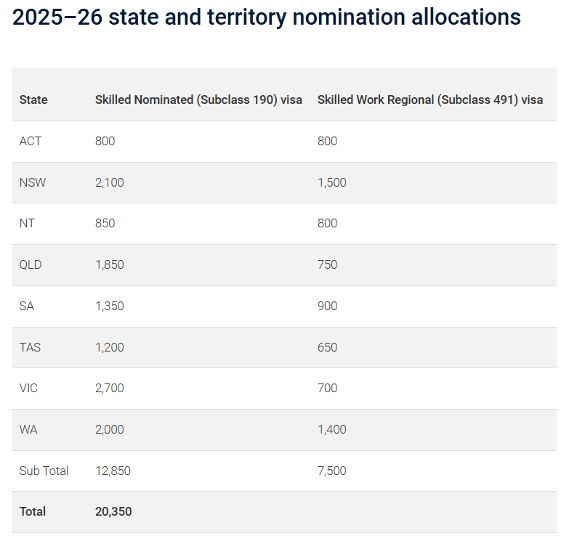
2025-26_state_and_territory_nomination_allocations.jpeg

Source: https://immi.homeaffairs.gov.au/what-we-do/state-and-territory-nomination-allocations

Another important part of the program is employer-sponsored migration. Under this pathway, an employer can sponsor someone for an occupation on a skilled list. They must advertise the role and demonstrate the genuine need for the position within their business.

This can be a more efficient pathway because every migrant who comes through this process is going into a paid job that is paid above a minimum amount, which is currently the Core Skills Income Threshold of $76,515. This is expected to increase from 1 July 2026.

Is There Really “Mass Immigration” in Australia?

Based on the planning levels from the last decade, the narrative that the migration program is unplanned and unmanaged doesn’t reflect reality. The program has many requirements, and it is often very difficult to obtain a visa to study or work in Australia.

The Federal Government and the states carefully select applicants by occupation and points to address known industry skills shortages. At a federal level, the government uses Jobs and Skills Australia while the state government departments use their own data to make decisions on who is granted a visa.

In the 2025–2026 financial year, there are 185,000 permanent residency places. When you look at the data from the planning levels in the last 10 years (see table above), this number is not very different from previous years.

For example, in 2015–2016, the Australian Government granted 189,770 permanent visas. The year with the lowest number of permanent visas granted was in 2021–22, when 143,556 permanent visas were granted out of 160,000 places. This was during COVID-19 when migration to Australia was limited due to border closures and overall effects of the pandemic.

During the pandemic, Australia experienced major skills shortages across many sectors, from hospitals to restaurants. If migration levels were reduced to a level lower than during COVID, as proposed by One Nation, Australia could face even greater skills shortages than it did at that time.

Skill shortages can then impact the economy and simple things like the price you pay for your food. For example, people in cities want avocado on toast, but they don’t want to pick the avocados. If there are no temporary workers, such as working holiday makers or regional workers, how much will that avocado on toast cost — or will it get picked at all?

Another important point is that New Zealand citizens or permanent residents are not counted in the 185,000-visa cap. In the five years prior to the pandemic, the average number of New Zealand migrants arriving in Australia each year was around 32,000, and in 2024–25 this number has increased to around 53,000. This represents a significant increase and is not included in the migration planning level.

Humanitarian visas are also not counted in the 185,000 migration planning level for 2025–2026, and this represents about 20,000 permanent residency places.

We have created the following table to show the planned number of visas and migration places for 2025–2026, including Skilled, Family visas, Humanitarian visas and New Zealand citizens or permanent residents migrating to Australia, not only the 185,000 places from the Migration Planning Levels.

For New Zealand citizens and permanent residents, the figure used is from 2024–2025, as the 2025–2026 data is not yet available. We expect a similar number in 2025–2026.

Category

Number of Permanent Residency (2025-26)

Percentage of total

Skilled Visas

132,200

51.3%

Family Visas

52,500

20.4%

Humanitarian Visas

20,000

7.8%

New Zealand Migrating to Australia

53,020 (2024-25)

20.6%

Total

257,720

100%

As shown in the table, more than half of the permanent residency visas planned to be granted in the 2025–2026 financial year are Skilled visas. This is followed by Family visas, which represent 20.4%, and Humanitarian visas, which represent only 7.8% of the total.

However, one important point that is often not discussed is the number of New Zealand citizens or permanent residents migrating to Australia and the impact this can have on the country. This is not included in the Migration Program planning levels, but it still represents a significant number, equivalent to around 20.6% of the total figures shown above.

As an immigration lawyer who has worked in the migration industry for over 20 years, my view is that Australia’s migration system is not uncontrolled. There is always room for improvement, particularly in refining the points test and strengthening regional migration pathways. However, significant cuts to migration levels could create serious challenges across multiple sectors of the Australian economy.

The key is finding the right balance to ensure the system continues to support economic growth, address skill shortages, and deliver long-term benefits for Australia.

It is also important to note that Net Overseas Migration, or NOM, is a separate issue and will be discussed in a separate article, as it involves different data and a broader discussion than the permanent migration program.

What Happens If Migration Is Drastically Cut?

There have been proposals by One Nation to reduce migration levels to 130,000 places, which is significantly lower than current planning levels and even lower than the reduced levels during COVID-19.

To put this into context, during COVID (2020–2021), when migration dropped to around 143,000, Australia experienced widespread skills shortages across multiple industries, from healthcare to hospitality and agriculture.
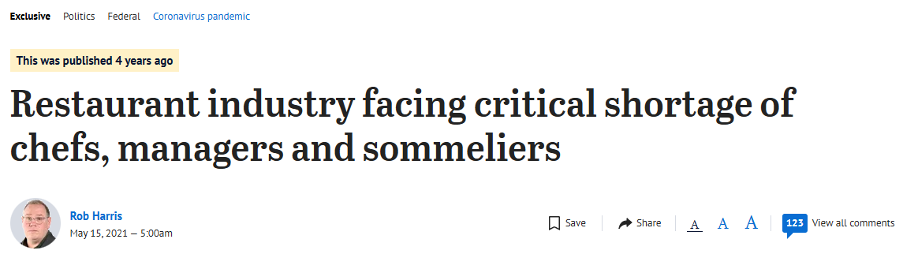
Restaurant_industry_facing_critical_shortage_of_chefs_manager_and_sommeliers.jpeg

Source: https://www.smh.com.au/politics/federal/restaurant-industry-facing-critical-shortage-of-chefs-managers-and-sommeliers-20210513-p57rn1.html
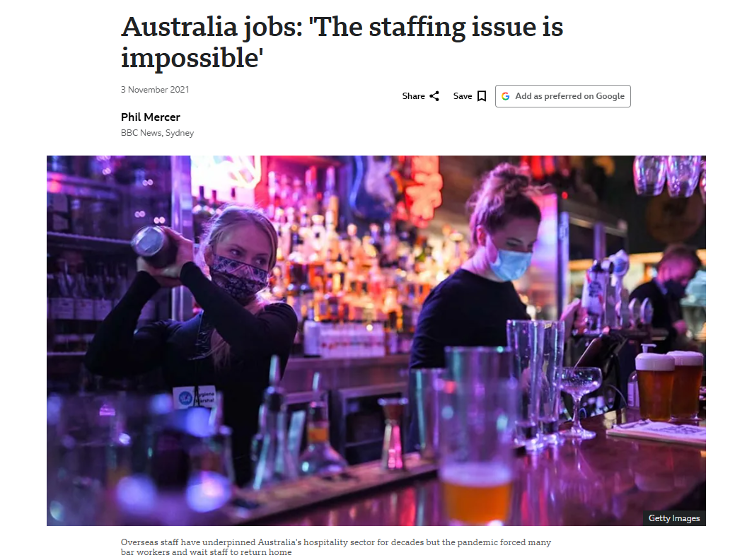
Australia_jobs_The_staffing_issue_is_impossible.jpeg

Source: https://www.bbc.com/news/business-59093560

If migration were reduced further, those shortages could return at an even greater scale. Australia could struggle to complete major infrastructure projects, meet healthcare demand, and support key industries that rely on overseas workers.

Even everyday services and costs would be affected. People often overlook how migration supports the daily life of each Australian and the positive contribution from migrant workers, from the workers who harvest food to those preparing meals in cafés and restaurants.

The drastic cuts now being called for by One Nation would take migration levels closer to the slump seen during COVID. That period led to major skill shortages and serious problems across the economy.

We also seem to have forgotten very quickly just how severe the skill shortages were during COVID.

At that time, there were a range of harsh immigration policies. The Government of the day told international students to go home, and many did.

With the borders closed, and with no new skilled migrants, working holiday makers or international students arriving, Australia experienced an extreme shortage of workers across almost every industry.

In an unprecedented move, the Australian Government created the COVID-19 Pandemic event visa, which allowed many people to stay and work in different industries during a period of clear national labour shortage and urgency.

If migration cuts were made to the level of 130,000, as proposed, Australia could return to the kind of ongoing labour shortages and pressure that existed during COVID and in the period immediately after it, which many people already seem to have forgotten.

Another major problem that very few people talk about is that, even if there were enough homes for everyone to buy, many people still would not be able to purchase one. The problem is not only housing supply, many people do not have the money for a deposit, or they would not qualify for a home loan because the bank would not approve the finance. I will talk more about migration and house crises later in this article.

Migration and the Economic Effects

Migration is closely tied to Australia’s economy and workforce.

Sectors like education and tourism are among the largest employers in the country, and both rely heavily on migration. Reducing migration in these areas could have flow-on effects, including job losses for Australians.

By comparison, industries often highlighted in economic discussions, such as mining, employ a much smaller proportion of the workforce.

According to Job and Skills Australia:

  • Education and Training is the 5th largest employing sector in Australia, with 8.9% of the workforce
  • Accommodation and Food Services is the 6th largest, with 6.7% of the workforce

By comparison:

  • Mining is the 14th largest sector, employing only 2.0% of the workforce

So, cutting migration could potentially slow down the Australian economy and affect many sectors.

Migration and Housing: What Is the Real Impact?

Migration is often blamed for the housing pressure in Australia, but the reality is far more complex.

Reducing migration may have some effect at the margins, but it is unlikely to solve the housing problem on its own. Housing shortages are also driven by other major issues, including slow and expensive council processes, planning restrictions, limited subdivision opportunities, and barriers to building more homes on available land.

Another important issue is access to finance. This can be an uncomfortable point to raise, but not everyone has the same ability to borrow money or secure finance to build or buy a home. Many Australian citizens and permanent residents simply cannot get a loan.

I will be writing another article soon looking more closely at the relationship between housing shortages and immigration.

Final Thoughts

Often, when there is a difficult conversation to be had, it is easier to avoid it. That is why many people working in the immigration industry may not want to engage with the term “mass migration”.

But when a term becomes very common and is used repeatedly, it is worth asking how accurate it really is.

Is there really something new happening that should be called “mass migration”?

The view I am putting forward is that there has not been a dramatic shift of the kind this term suggests. Migration numbers have gone up and down over time, but before COVID they were at levels similar to those we are seeing now. Over the last 10 years, migration numbers have generally been between 160,000 and 190,000.

There was an outlier during COVID, when migration numbers dropped to 143,000. The result of that one major drop was severe skills shortages across many sectors.

A prolonged migration policy of around 130,000 places, as proposed by One Nation, would lead to drastic skills shortages in Australia. This would translate into a lack of healthcare and other basic services for Australians.

Another important point is that it has not been proven that migration numbers are the primary cause of the housing shortage, as One Nation has implied.

It is possible that keeping migration numbers at around 130,000 over time could have a double negative economic effect for Australia: an economic downturn, a lack of services in healthcare and other areas, and still ongoing housing shortages.

The housing shortage needs to be addressed by building more houses.

Author: Chris Johnston – Immigration Lawyer

Sources:

2025–2026 Migration Program planning levels – Department of Home Affairs: https://immi.homeaffairs.gov.au/what-we-do/migration-program-planning-levels

Migration Program data since 2015–2016 – Department of Home Affairs: https://www.homeaffairs.gov.au/research-and-statistics/statistics/visa-statistics/live/migration-program

ABC News – Australia’s skills shortages: https://www.abc.net.au/news/2022-10-06/national-skills-commission-report-occupation-shortages-soar/101505668

Sydney Morning Herald – Hospitality skills shortages: https://www.smh.com.au/politics/federal/restaurant-industry-facing-critical-shortage-of-chefs-managers-and-sommeliers-20210513-p57rn1.html

BBC News – Australia jobs and staffing shortages: https://www.bbc.com/news/business-59093560

ATO – Types of property a foreign person can buy in Australia: https://www.ato.gov.au/individuals-and-families/investments-and-assets/foreign-resident-investments/foreign-investment-in-australia/types-of-property-a-foreign-person-can-buy

The Guardian – New Zealanders moving to Australia: https://www.theguardian.com/world/2025/nov/03/new-zealand-economy-record-numbers-leave-why-people-choosing-australia#:~:text=Of%20those%2C%2058%25%20moved%20to%20Australia.%20Some,experience**%20*%20**Remote%20geography**%20*%20**Small%20scale**

ABS – Overseas Migration, 2024–2025: https://www.abs.gov.au/statistics/people/population/overseas-migration/latest-release

Continue reading
0 Comments

Big Updates on Australian Immigration!

Big Updates on Australian Immigration!

Big Updates on Australian Immigration!

Australian immigration is changing quickly in 2026. These updates are not limited to one visa type. They affect several parts of the migration system, including employer sponsored visas, student visas, graduate visas, Parent visas, Training visas, Visitor visas, state nomination and visa refusal appeals.

For many applicants, the key issue is timing. A change to salary thresholds, lodgement rules, appeal procedures or visa fees can affect whether an application is valid, affordable or likely to succeed. Employers also need to be careful, especially where sponsorship, nomination and salary requirements are involved.

This article expands on our YouTube video, “Big Updates on Australian Immigration!” If you watched the video and want more detail, this guide explains what the changes may mean and what applicants and employers should consider next.

This is general information only. It is not legal advice. Australian migration law changes often, and the best option will depend on your individual circumstances.

In this blog, we explain the main Australian immigration updates discussed in our YouTube video, including the new approved work sponsor register, employer sponsored visa salary threshold changes, Parent visa online lodgement, Subclass 407 Training visa changes, Subclass 485 Temporary Graduate visa fee increases, stronger student visa scrutiny, ART appeal changes, Iranian Visitor visa restrictions and recent 190 and 491 state nomination news.

New Approved Work Sponsor Register

The Australian Government has introduced changes that allow information about approved work sponsors to be published in a public register.

This register may include information such as the sponsor’s name, ABN, postcode, number of nominations and the types of occupations sponsored. The purpose appears to be greater transparency in the employer sponsorship system.

For skilled workers, this may be helpful because it could make it easier to identify employers who have used sponsorship pathways before. For employers, it may increase visibility and lead to more enquiries from workers looking for sponsorship.

However, workers should be careful. A sponsor appearing on a register does not automatically mean that the employer is currently hiring, willing to sponsor new workers or able to nominate every occupation.

What skilled workers should consider

If the register becomes available, skilled workers may be able to use it as one research tool. However, it should not be the only strategy. Applicants should still consider whether:

  • the employer has a genuine position available
  • the occupation is eligible for the relevant visa pathway
  • the salary meets the relevant requirements
  • the worker has the required skills, experience and English level
  • the employer understands sponsorship obligations

What employers should consider

Employers should make sure their sponsorship practices are compliant. This includes salary, employment conditions, record keeping and nomination accuracy.

Official source: Migration Amendment legislation https://www.legislation.gov.au/C2026A00039/asmade/2026-04-08/text/original/pdf 

Employer Sponsored Visa Salary Thresholds

Salary thresholds are one of the most important parts of many employer sponsored visa applications.

The Department of Home Affairs has salary requirements for employer nominations, including for Subclass 482 and Subclass 186 nominations. In simple terms, employers generally need to show that the nominated salary meets the relevant threshold and is consistent with Australian market salary requirements.

In the video, we discussed expected salary threshold increases from 1 July 2026:

Core Skills Income Threshold, or CSIT
Current amount discussed: $76,515
Expected amount from 1 July 2026: $79,499

Specialist Skills Income Threshold, or SSIT
Current amount discussed: $141,210
Expected amount from 1 July 2026: $146,717

These thresholds are relevant to employer sponsored pathways, including the Skills in Demand visa and some Employer Nomination Scheme applications.

New Financial Year starting on 1 July 2026

Australian visa settings often change at the start of a new financial year. A nomination lodged before 1 July may be considered under different settings compared with one lodged after 1 July.

This means employers and applicants should not leave salary discussions until the last minute. A small salary difference can create a major issue if it means the nomination does not meet the relevant threshold.

Practical steps for employers

Before lodging an employer sponsored nomination, employers should review:

  • the nominated occupation
  • the proposed salary
  • the market salary rate
  • employment contract terms
  • full-time or part-time status
  • duties of the role
  • work location
  • whether the nominated position is genuine

Stronger Scrutiny Across Temporary Visas

Although the Department has not officially announced a general “temporary visa crackdown”, many applicants are experiencing stronger scrutiny across different temporary visa programs.

This may affect Partner visa applicants, Student visa applicants, Training visa applicants, Graduate visa applicants and Visitor visa applicants.

The practical message is simple: applicants should prepare properly, respond to Department requests on time and avoid assuming that a visa will be approved just because similar applications were approved in the past.

Partner Visa Phone Calls and Scam Risks

Some Partner visa applicants may receive phone calls from the Department of Home Affairs. This can happen where the Department wants more information or needs to clarify details about the application.

However, applicants should also be careful about scams. Scammers may pretend to be from the Department or another government agency.

The Department will not ask for your ImmiAccount password. Be very careful if anyone asks for bank details, credit card details or unusual payment methods over the phone.

What Partner visa applicants should do

If you receive a phone call about your visa application:

  • stay calm and do not feel pressured
  • ask for the request to be sent in writing if you are unsure
  • check your ImmiAccount
  • do not provide passwords or payment details over the phone
  • speak with your migration lawyer or registered migration agent if you are represented
  • respond to genuine Department requests before the deadline

This is especially important for second-stage Partner visa applications, where failure to respond to document requests can create refusal risks.

Subclass 407 Training Visa Changes

The Subclass 407 Training visa has become more difficult to lodge for some applicants.

From 10 March 2026, Training visa applicants must have an approved sponsor and nomination before they can apply for the visa. This is an important change because previously some applicants may have planned to lodge while sponsorship or nomination steps were still being finalised.

This change may create problems for onshore applicants whose current visas are expiring soon. If the sponsorship and nomination are not approved in time, the applicant may not be able to lodge a valid Training visa application before their current visa expires.

What 407 visa applicants should prepare

A strong Training visa strategy should consider:

  • whether there is an approved sponsor
  • whether the nomination is ready and complete
  • the type of occupational training being proposed
  • whether the training is genuine
  • the applicant’s current visa expiry date
  • whether the training plan matches the applicant’s background and goals
  • whether the applicant can meet health, character and other requirements

Temporary Graduate Visa Subclass 485 Fee Increase

The Subclass 485 Temporary Graduate visa is an important pathway for many international students who complete eligible studies in Australia.

The Department of Home Affairs currently lists the starting cost for the Post-Higher Education Work stream as AU$ 4,600. This is a significant increase for many graduates, considering the previous cost of only AU$ 2,300.

Because the visa charge is now much higher, applicants should be careful before lodging. A refusal can be expensive and may also affect future visa planning.

What 485 visa applicants should check

Before lodging a 485 visa application, graduates should check:

  • whether they are applying in the correct stream
  • age requirements
  • qualification requirements
  • English language requirements
  • health insurance
  • AFP police check requirements
  • timing from course completion
  • current visa expiry date
  • whether family members are included correctly

Student Visa Refusals and Stronger Evidence Requirements

Student visa applications continue to receive strong scrutiny.

Applicants should not assume that enrolment in an Australian course is enough. The Department may look closely at the applicant’s reasons for study, financial position, immigration history, previous study, work background and whether the proposed course makes sense.

For many applicants, the Genuine Student requirement is one of the most important parts of the application.

Common student visa risk areas

Student visa applicants should carefully address:

  • why they chose Australia
  • why they chose the course and education provider
  • how the course fits their past study or employment
  • how the course helps their future plans
  • evidence of financial capacity
  • English language evidence
  • gaps in study or employment history
  • previous visa refusals or cancellations
  • family, economic or personal ties outside Australia

If a student visa is refused, some applicants may have appeal rights. However, appeal deadlines are strict.

Parent Visa Applications Can Now Be Lodged Online

From 22 April 2026, several Parent visa applications must be lodged online through ImmiAccount.

This is a major practical change because many Parent visa applications previously involved paper forms and postal lodgement.

Online lodgement may make the process easier to manage. Applicants can upload documents, track the application and reduce the risk of postal delays.

Parent visa subclasses affected

The online lodgement change applies to several permanent Parent visa subclasses, including:

Parent visa processing remains slow

Online lodgement does not remove the long waiting times for many Parent visas. Parent visa applications are still affected by capping and queueing arrangements.

This means families should plan early and consider whether another visa option may be suitable while waiting.

ART Appeal Changes: Written Evidence May Become Even More Important

The Administrative Review Tribunal, or ART, reviews many migration and visa refusal decisions.

The Australian Government has announced reforms that may allow the Tribunal more flexibility to decide some matters based on written material without an oral hearing, where it is reasonable and appropriate to do so.

The government has indicated that this may first apply to student visa refusal reviews.

This does not mean every case will be decided without a hearing. However, it does mean written submissions and evidence may become even more important.

What visa refusal applicants should do

If your visa is refused, do not simply lodge an appeal and wait.

You should consider preparing:

  • detailed written submissions
  • evidence responding directly to the refusal reasons
  • updated documents
  • explanations for any inconsistencies
  • evidence of changed circumstances
  • legal arguments, where appropriate

Appeal deadlines can be very short. If you miss the deadline, you may lose the opportunity to have the decision reviewed.

Iranian Visitor Visa Restrictions

A temporary travel restriction applies to certain people outside Australia who hold a Visitor visa Subclass 600 linked to an Iranian passport.

The Arrival Control Determination began on 26 March 2026 and is in force for six months, unless extended or changed. The Department states that it applies to people who are outside Australia, hold a Visitor Subclass 600 visa and whose visa is linked to a passport issued by the Islamic Republic of Iran, unless an exemption applies.

This does not affect every Iranian citizen or every Iranian visa holder.

Who should check carefully?

You should check your situation carefully if you:

  • are outside Australia
  • hold a Subclass 600 Visitor visa
  • used an Iranian passport for the visa application
  • are planning to travel to Australia soon
  • may fall within an exemption
  • need to apply for a permitted travel certificate

State Nomination Updates for 190 and 491 Visas

As Australia approaches the end of the 2025–2026 financial year, state nomination programs are becoming more limited and they states will be closing soon. 

We are going to publish another blog and Youtube video with more details on state nomination 190 and 491 visas. 


Need Help With an Australian Visa?

Australian immigration changes can affect students, skilled workers, employers, graduates, parents, visitors and people with visa refusals.

If you need help understanding your visa options, Work Visa Lawyers can assist. Our team includes immigration lawyers and registered migration agents who advise on employer sponsored visas, student visas, graduate visas, Parent visas, Training visas, Visitor visas, state nomination, visa refusals and ART appeals.

You can book a consultation with Work Visa Lawyers to discuss your circumstances and plan your next step.

Book an Appointment


Frequently Asked Questions

What are the biggest Australian immigration updates in 2026?

Major 2026 immigration updates include the new approved work sponsor register, expected employer sponsored salary threshold increases, online Parent visa lodgement, 407 Training visa changes, higher 485 visa fees, student visa scrutiny, ART appeal changes, Iranian Visitor visa restrictions and 190/491 state nomination updates.

What is the approved work sponsor register?

The approved work sponsor register is a new measure that may allow public information about approved work sponsors to be published. This may include sponsor details and information about sponsored occupations. It may help workers identify employers who have previously sponsored overseas workers.

Are employer sponsored visa salary thresholds increasing?

Salary thresholds are expected to increase from 1 July 2026 from $76,515 to $79,499. Employers should check the latest Department of Home Affairs salary requirements before lodging a nomination, especially for Skills in Demand and Employer Nomination Scheme applications.

Can Parent visas now be lodged online?

Yes. From 22 April 2026, several permanent Parent visa applications must be lodged online through ImmiAccount, including Subclass 103, 143, 804 and 864 applications.

What changed for the 407 Training visa?

From 10 March 2026, Subclass 407 Training visa applicants must have an approved sponsor and nomination before they can apply for the visa. This makes early preparation very important, especially for applicants in Australia with visas expiring soon.

How much does the 485 Temporary Graduate visa cost?

The Department of Home Affairs currently lists the starting cost for the Subclass 485 Post-Higher Education Work stream as AUD $4,600. Applicants should check the latest visa application charge before lodging.

Are student visa refusals increasing?

Student visa applications are receiving strong scrutiny. Applicants should provide clear evidence of genuine study intention, financial capacity, course relevance and immigration history. If a student visa is refused, some applicants may have appeal rights, but deadlines are strict.

Can the ART decide a visa appeal without a hearing?

The Australian Government has announced changes that may give the ART more flexibility to decide some matters based on written material without an oral hearing, where appropriate. This means written evidence and submissions may become even more important.

Are Iranian Visitor visa holders restricted from travelling to Australia?

A temporary travel restriction applies to certain people outside Australia who hold a Subclass 600 Visitor visa linked to an Iranian passport, unless an exemption applies. Affected visa holders should check official Home Affairs information and their individual circumstances.

Are 190 and 491 state nomination programs still open?

It depends on the state or territory. Some programs may be closed, nearly full or still issuing invitations. Applicants should check the official state or territory migration website before making decisions.


Official Sources:

Continue reading
0 Comments

Why More US Citizens Are Moving to Australia

Why More US Citizens Are Moving to Australia

Why More US Citizens Are Moving to Australia

Australia is attracting growing interest from high talent individuals in the United States. This noticeable increase from US citizens wanting to move to Australia is reported to be driven by a mix of factors. The appeal is not just about lifestyle. It is also about opportunities, security and long-term stability.

Australia offers a strong economy, a high quality of life and access to a universal public healthcare system. It is also known for its cities, beaches, excellent education options and safer living environment. That can be especially attractive for professionals and families who are thinking beyond short-term career moves.

Australia also continues to welcome skilled professionals, founders, researchers, investors and other high-performing individuals. It is a globally connected market with opportunities across technology, health, research, clean energy and other growth sectors.

For Americans seeking career progression and a clear pathway to permanent residence, Australia is becoming an increasingly attractive option.

The National Innovation Visa (NIV): a direct pathway to permanent residency for highly talented individuals

One of the most important visa options for high talent Americans is the National Innovation Visa, or NIV. This is Subclass 858, a permanent visa for exceptionally talented migrants from around the world.

The NIV is designed for people who will help create jobs and drive productivity growth in key sectors of the economy. It is aimed at established and emerging leaders with high-calibre talent and skills who can make significant contributions to Australia’s future prosperity.

NIV sectors include, but are not limited to:

  • Critical Technologies
  • Health Industries
  • Renewables and low-emission technologies
  • Agri-food and AgTech
  • Defence Capabilities and Space
  • Education
  • Financial Services and FinTech
  • Infrastructure and Transport
  • Resources

The NIV replaced the Global Talent visa on 7 December 2024. Applicants generally begin by submitting an Expression of Interest, and they must be invited before they can apply for the visa itself.

Who May Be Eligible for the NIV?

The NIV may suit high talent Americans who have an internationally recognised record of exceptional and outstanding achievement. This can include:

  • global researchers
  • entrepreneurs
  • innovative investors
  • athletes
  • creatives

It may be especially relevant for people working in areas such as technology, AI, health, research, advanced manufacturing, clean energy and other future-focused sectors.

If you are thinking about investing in Australia, the NIV can also be an option, as some states, such as Queensland, can nominate individuals:

For the right person, the NIV can be a very attractive pathway because it offers permanent residence without needing to go through a traditional points-tested or employer-sponsored pathway first.

Another attractive feature of the NIV is that there is no age limit for this visa. However, if you are under 18 or over 55, you must show that you would be of exceptional benefit to the Australian community.

It is important to assess each case carefully, because the standard is high and the visa is intended for genuinely exceptional candidates.

What are my Australian visa options if I’m not eligible for the National Innovation Visa?

Not every talented individual will be the right fit for the National Innovation Visa. Many may instead be better suited to an employer-sponsored visa, skilled visas or partner visas.

Employer-sponsored visas

A common option is the Skills in Demand visa Subclass 482, which allows employers to sponsor skilled workers when they cannot source an appropriately skilled Australian worker.

Another important pathway is the Employer Nomination Scheme visa Subclass 186, which allows nominated skilled workers to live and work in Australia permanently.

For individuals in sectors such as technology, engineering, healthcare, education, finance and construction, employer-sponsored visas can be a practical and effective pathway to Australia.

To apply for an employer-sponsored visa you must have an Australian business willing to sponsor you. If you still don’t have an employer to sponsor you, please check our blog “how to find a sponsor”.

GSM visas (189, 190 and 491)

Some Americans may also be eligible for Australia’s skilled migration program. The Government’s SkillSelect system is used for skilled workers who want to express interest in applying for visas such as the Skilled Independent visa Subclass 189, Skilled Nominated visa Subclass 190 and Skilled Work Regional visa Subclass 491.

These visas are points-tested. The Department states that the 189, 190 and 491 visas require applicants to meet or exceed the points threshold of 65, although in practice a higher score is often needed to be competitive for an invitation.

For individuals with strong qualifications, good English, relevant work experience and an occupation that aligns with Australia’s skilled migration system, this can be another pathway worth exploring.

You must be invited to apply for the 189, 190 or 491 visas.

Partner visas

If a US citizen has an Australian citizen or permanent resident spouse or de facto partner, a partner visa may also be an option.

For some, this may be the most suitable long-term pathway, particularly where the relationship is genuine and ongoing and the couple plans to build their future together in Australia.

Which Australian Visa Pathway May Be Right for You?

For high talent individuals from the USA, there is no single visa pathway that suits everyone. The best option will depend on the person’s background, level of achievement, occupation, job opportunities, age and family circumstances.

For some, the National Innovation Visa may be the standout option. For others, an employer-sponsored visa, a skilled visa or a partner visa may be more realistic and more strategically appropriate. The key is understanding which pathway best fits the person’s profile and long-term goals.

Need Help Moving to Australia from the USA?

If you are a high talent individual from the USA or you have an Australian partner and you are considering moving to Australia, getting the right advice early can make a real difference.

Work Visa Lawyers is one of the best migration law firms in Australia and can help you assess your options and identify the visa pathway that best fits your goals, experience and circumstances.

If you would like tailored advice about moving to Australia from the United States, contact Work Visa Lawyers to discuss your visa strategy.

Talk to an Immigration Lawyer

Continue reading
0 Comments

What Are My Visa Options After My Working Holiday Visa Expires?

What Are My Visa Options After My Working Holiday Visa Expires?

What Are My Visa Options After My Working Holiday Visa Expires?

If you’re living and working in Australia on a Working Holiday Visa (subclass 417 or 462), you might be thinking…
“What comes next?”

Many people return home when their visa ends. But many others choose to stay longer. Some even aim for permanent residency.

The great news?
There are real options to stay in Australia.

Here’s an easy guide to your options after your Working Holiday Visa expires, so you can make confident decisions.

Working Holiday Visas: A Quick Overview

Australia has two working holiday visas:

  • Subclass 417 – Working Holiday Visa
  • Subclass 462 – Work and Holiday Visa

They allow you to:
✔ Live in Australia

✔ Work while you stay

✔ Explore and travel

However, Working Holiday Visas are temporary. They do not automatically lead to permanent residency. So if your visa is ending soon, now is the best time to plan your next step.

Visa Options After Your Working Holiday Visa

Below are the most common pathways people take when they want to stay longer in Australia.

1. Stay Longer Through Employer Sponsorship

If an employer wants to keep you, employer sponsorship can help you stay.

Skills in Demand (SID) Visa – Subclass 482

The Skills in Demand (SID) framework is now the main pathway for employer-sponsored skilled workers. This visa allows Australian employers to sponsor skilled workers temporary for up to 4 years for genuine labour needs.

Key points

  • You must have a suitable skilled occupation
  • You must have the level of skills and experience required for the occupation
  • An Australian employer must sponsor you
  • You can work in Australia for up to 4 years
  • You have a pathway to permanent residency through the Employer Nomination Scheme Subclass 186 visa under the Temporary Residence Transition stream

For many Working Holiday Makers, this is one of the most practical next steps if you have proven your value at work.

Employer Nomination Scheme (Subclass 186)

This is a permanent residency visa.

If an employer wants to nominate you for a long-term role and you meet the criteria, this visa allows you to:

✔ Live in Australia permanently

✔ Work full-time

✔ Access long-term pathways

✔ Eventually apply for citizenship (if eligible)

Many people transition to this visa through the Subclass 186 Temporary Residence Transition stream after working on an employer-sponsored temporary visa i.e. Subclass 482 for 2 years.

There is also a Subclass 186 Direct Entry stream, which doesn’t require you to hold a Subclass 482 visa, but you must meet the requirements and eligibility criteria to apply.

2. Skilled Migration – Based on Your Skills

If your job is in demand and you have good qualifications, you may apply through SkillSelect.

Skilled Independent Visa (Subclass 189)

✔ Permanent residency

✔ No employer sponsorship required

✔ No state nomination needed

✔ Invitation required through SkillSelect

This visa is highly competitive but very powerful.

Skilled Nominated Visa (Subclass 190)

✔ Permanent residency

✔ No employer sponsorship required

✔ Requires state or territory nomination

✔ Invitation based on points and state needs

State nomination can improve your chances of being invited.

Skilled Work Regional Visa (Subclass 491)

✔ Temporary visa (up to 5 years)

✔ Regional location requirement

✔ Requires state/territory or family sponsorship

✔ Can lead to permanent residency via Subclass 191

This pathway is popular with Working Holiday Makers already living or working regionally.

Note: These visas depend on your age, qualifications, skills, work experience, skilled occupation, English level, points among other requirements.

3. Partner Visas – Stay Because of a Relationship

If you are in a genuine relationship with:

  • an Australian citizen,
  • a permanent resident,
  • or an eligible New Zealand citizen

You may apply for a Partner Visa.

Partner visas let you stay in Australia while your application is processed. Most partner visas eventually lead to permanent residency if you can meet the requirements for the second stage partner visa.

This is a strong option if your life and relationship are now here in Australia.

4. Study and Graduate Paths

Some people choose to study in Australia to stay longer and build skills.

Student Visa (Subclass 500)

✔ Study in Australia

✔ Work part-time

✔ Build skills and qualifications

This pathway can help you prepare for:

  • skilled visas
  • employer sponsorship
  • future PR opportunities

Temporary Graduate Visa (Subclass 485)

After completing eligible study, this visa allows you to:

✔ Stay longer in Australia

✔ Work full-time

✔ Gain experience in your field

This visa is often used as a bridge to skilled or employer-sponsored visas.

5. Other Options to Consider

Depending on your situation, there may be additional options including:

Your eligibility depends on your personal situation and goals.

Important Tips Before You Apply

✔ Always apply for a valid visa before your current visa ends.

✔ Many visas require skills assessments, English tests and health checks – make sure to have these ready.

✔ Points-based visas depend on age, skills, English and demand.

✔ Immigration rules change regularly — always check official sources.

Final Thoughts

Ending your Working Holiday Visa doesn’t mean the end of your journey in Australia.
You may be able to stay longer, work, study, or even build a life here.

Whether your next goal is:
✨ continuing work with an employer
✨ gaining permanent residency through skills
✨ staying with a partner
✨ expanding your career through study

There are real visa pathways worth exploring.

If you want help figuring out which route is best for you, consulting a migration professional can make the process smoother and more confident. Our team of migration lawyers and registered migration agents are here to help if you need to discuss your visa options.

Official Department of Home Affairs References

Working Holiday Visas
https://immi.homeaffairs.gov.au/visas/getting-a-visa/visa-listing/work-holiday-417
https://immi.homeaffairs.gov.au/visas/getting-a-visa/visa-listing/work-holiday-462

Employer-Sponsored & Skills in Demand Framework
https://immi.homeaffairs.gov.au/visas/getting-a-visa/visa-listing/temporary-skill-shortage-482

Employer Nomination Scheme (186)
https://immi.homeaffairs.gov.au/visas/getting-a-visa/visa-listing/employer-nomination-scheme-186

Skilled Migration / SkillSelect
https://immi.homeaffairs.gov.au/visas/working-in-australia/skillselect

Student Visa (500)
https://immi.homeaffairs.gov.au/visas/getting-a-visa/visa-listing/student-500

Temporary Graduate Visa (485)
https://immi.homeaffairs.gov.au/visas/getting-a-visa/visa-listing/temporary-graduate-485

Continue reading
0 Comments

February Immigration News 2026: An Anti-Immigration Party Is Rising, State Nomination Updates and the Best Australian Visas for 2026

February Immigration News 2026: An Anti-Immigration Party Is Rising, State Nomination Updates and the Best Australian Visas for 2026

February Immigration News 2026: An Anti-Immigration Party Is Rising, State Nomination Updates and the Best Australian Visas for 2026

In this February immigration update, we focus on the information that will help you plan and apply for Australian permanent residency (PR) in 2026.

This month’s key topics include:

Watch the Full Video:

Political Shift: The Rise of One Nation and Immigration Policy

One Nation is now recording its second-highest approval rating. This is a major political shift that could ultimately lead to a reduction in immigration. This may negatively impact the chances of many people seeking Australian permanent residency.

The Rise of One Nation

To quote the Australian Financial Review on 1 February:

“Following two weeks of Coalition infighting, first-preference support for One Nation has jumped to 26 per cent, up from 17 per cent in December. One Nation overtaking the Liberals and Nationals for the first time ….”

In the same poll, Labor was at 34 per cent.

What are the current immigration policies of One Nation?

According to their website, One Nation’s migration policies include:

  • Capping visas at 130,000 per year — referring to permanent residency visas, which are currently set at 185,000 per year
  • Deporting 75,000 illegal migrants
  • Reintroducing Temporary Protection Visas (TPVs)
  • Proposing an eight-year waiting period for citizenship and welfare eligibility

The history of One Nation began with an anti-immigration maiden speech by Pauline Hanson in 1996. There have been many ups and downs since then.

In her maiden speech, she called for multiculturalism to be abolished, with anti-multiculturalism themes continuing to the present.

One Nation is generally anti-immigration, and if it gains more popularity, this could reduce immigration in the future.

For example, major parties could adopt or move closer to One Nation policies. This previously occurred during the John Howard period.

State Nomination News: 190 and 491 Visa Updates

New South Wales 491 Visa Closed

On 19 January 2026, New South Wales opened and closed its 491 Pathway 1 and Pathway 3 on the same day due to exceptionally high demand. Many people missed out simply because they couldn’t apply quickly enough.

Is NSW selecting the best candidates or just the fastest applicants?

South Australia Invitation Rounds

South Australia is currently running invitation rounds on the first Monday of each month.

For February, South Australia invited:

Health professionals were the clear winners in this round.

If you are working in healthcare or an allied health occupation, South Australia may currently offer stronger prospects than some other states.

Northern Territory Closure

The Northern Territory has now closed to new applications.

According to the NT Government website:

“The NT Government has now received sufficient applications to fill the nomination allocation for the 2025–26 program year. The NT nomination portal is now closed to new applications. Applications lodged prior to the closure will continue to be assessed, with outcomes to be provided by 30 June 2026.”

We expect more states to start closing soon.

Should You Move States for State Nomination?

This is one of the most common questions we receive.

Work Visa Lawyers is cautious with this advice because every state is dealing with the same issue: large numbers of temporary visa holders competing for a relatively small number of state nomination places.

We are now well into the 2025–26 program year, which ends on 30 June 2026.

There is a real risk that you:

  • Relocate
  • Spend significant money
  • Change jobs
  • And then the state program closes shortly after

Relocating is expensive, and finding new employment takes time. Migration decisions should be strategic — not reactive.

Please book an appointment before you move states. 

Employer-Sponsored Visas: 482 and 186 Pathways

This brings us to employer-sponsored visas, such as:

If you secure a genuine job offer with strong prospects of sponsorship in your occupation, I am much more open to relocation.

At the moment, employer-sponsored visas can be a more reliable pathway than waiting for state nomination invitations.

Of course, finding an employer willing to sponsor you is not easy. We have published guidance on how to approach employers strategically and position yourself for sponsorship.

DAMAs: A Growing Alternative Pathway

We are seeing increasing interest in Designated Area Migration Agreements (DAMAs).

DAMAs are employer-sponsored migration pathways designed for specific regional areas.

Traditionally, interest was driven by:

  • A broader range of eligible occupations
  • Access for truck drivers, disability carers, and other critical roles
  • Age concessions (particularly for applicants aged 45–55)

Increasingly, however, we are seeing applicants turn to DAMAs after years of trying — and failing — to receive invitations for the Subclass 189, 190, or 491 visas.

This is especially common for onshore applicants who are not receiving invitations and need a more realistic pathway to Australian PR.

National Innovation Visa: Queensland Focus

We are seeing strong interest in Queensland’s state nomination options under the National Innovation Visa framework.

Queensland currently offers:

  • An entrepreneuroptionrequiring a $1 million investment
  • An investoroptionrequiring a $5 million investment

Entrepreneurs and investors often do not fit neatly into traditional migration models. Their education may not align with their professional history, they may not suit skills assessments, and they are typically not dependent on a single employer.

The flexibility of the National Innovation Visa is what makes it so attractive.

We offer a free assessment for those wishing to explore whether this pathway could suit their circumstances.

New Income Threshold for Employer-Sponsored Visas

The new income threshold for the upcoming financial year, starting on 1 July, will be announced soon.

If the government applies a similar increase to last year (approximately 4.6%) the minimum salary requirement for employer-sponsored visas such as the Subclass 482 and Subclass 186 could rise from $76,515 to approximately $80,000.

The Australian Bureau of Statistics will publish its latest Average Weekly Earnings report on 26 February, which will provide a clearer indication of the likely increase.

If you are close to the current threshold, timing may become critical.

Hate Speech Laws and Migration Policy

Hate speech law changes have now been enacted, and we will continue to monitor how these affect migration policy, visa decision-making, and visa cancellation powers.

Planning Your Australian PR Strategy in 2026

The Australian migration landscape is becoming increasingly competitive and politically sensitive. With tighter state nomination programs, rising income thresholds and potential political shifts influencing migration caps, applicants must approach their Australian permanent residency strategy with careful planning and informed decision-making.

Key takeaways for 2026 include:

  • DAMAs are becoming a realistic and structured regional alternative
  • Income thresholds for sponsored visas are likely to rise
  • Political developments could influence future migration caps and policy settings

In this environment, relying on timing or chance is no longer sufficient. A clear, strategic migration plan — tailored to your occupation, visa history and long-term goals — is more important than ever.

Work Visa Lawyers is recognised as one of Australian’s leading immigration law firms, with extensive experience in skilled migration, employer-sponsored visas, DAMAs, partner visas, global talent, national innovation visa and complex migration matters. 

Our team of immigration lawyers and registered migration agents provides strategic advice through both in-person consultations in Adelaide and secure online consultations for clients across Australia and overseas.

If you are planning your Australian PR pathway in 2026, obtaining professional guidance early can significantly improve your prospects and reduce unnecessary risk.

Talk to an Immigration Lawyer

Continue reading
0 Comments

Sign up to our Migration Newsletter

Work Visa Lawyers works on Kaurna Land
We acknowledge and pay respect to the past, present and future Traditional Custodians and
Elders of this land and this nation, and the continuation of cultural, spiritual and educational
practices of Aboriginal and Torres Strait Islander peoples.

This site's contents are for general information purposes only
We recommend you seek advice from a Registered Migration Agent and Lawyer
(such as Work Visa Lawyers) in relation to your factual situation and relevant migration laws

Liability limited by a scheme approved under Professional Standards Legislation

Site by Adelaide Websites